Where is Singapore’s ‘Strategy for Children’?
We have national strategies for AI, climate, and aging. Yet, there is no single, coherent strategy – and no clear leadership – responsible for the holistic development of our children and young people (CYP) from birth to 21.
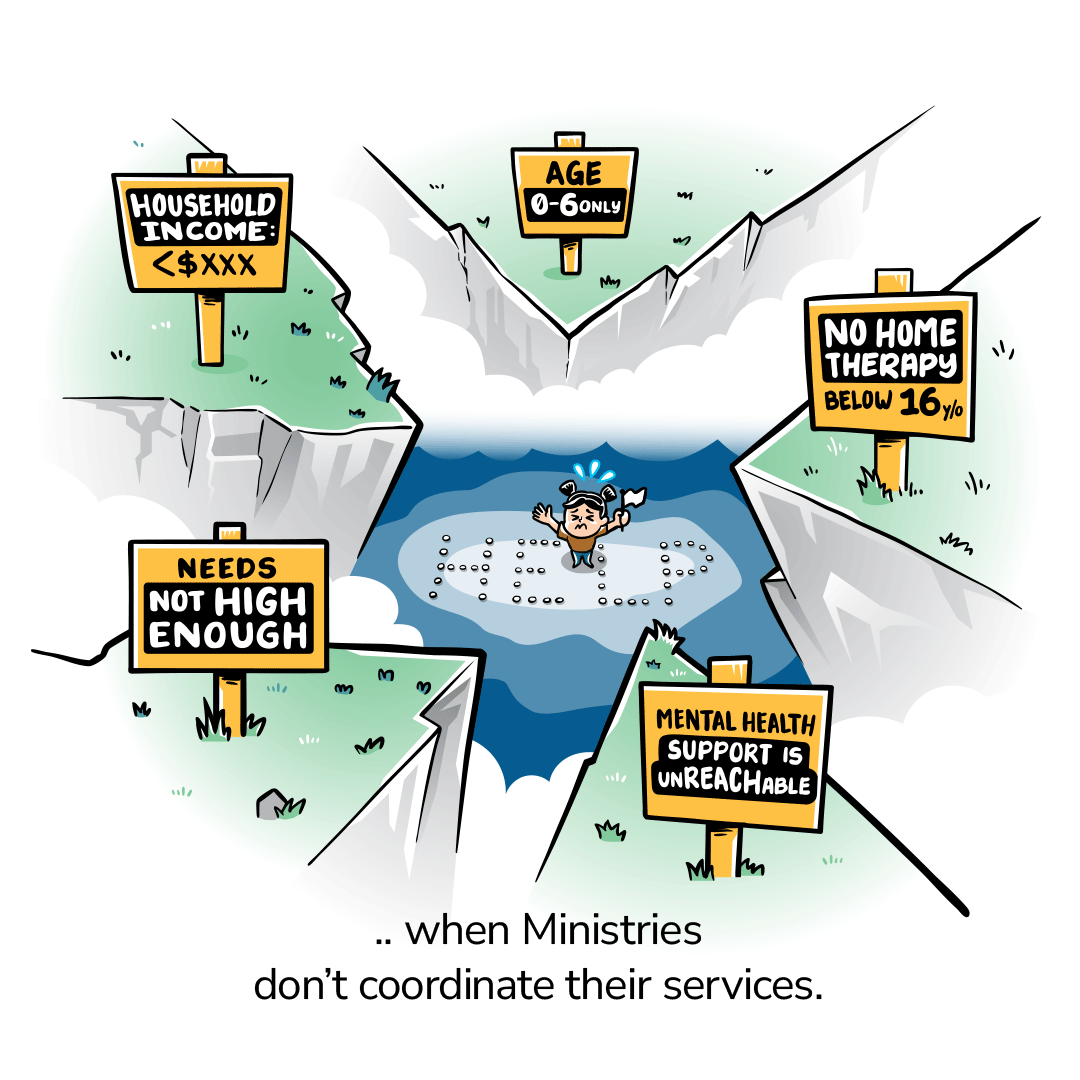
Today, responsibility is split across multiple ministries. For families, this creates:
-
1
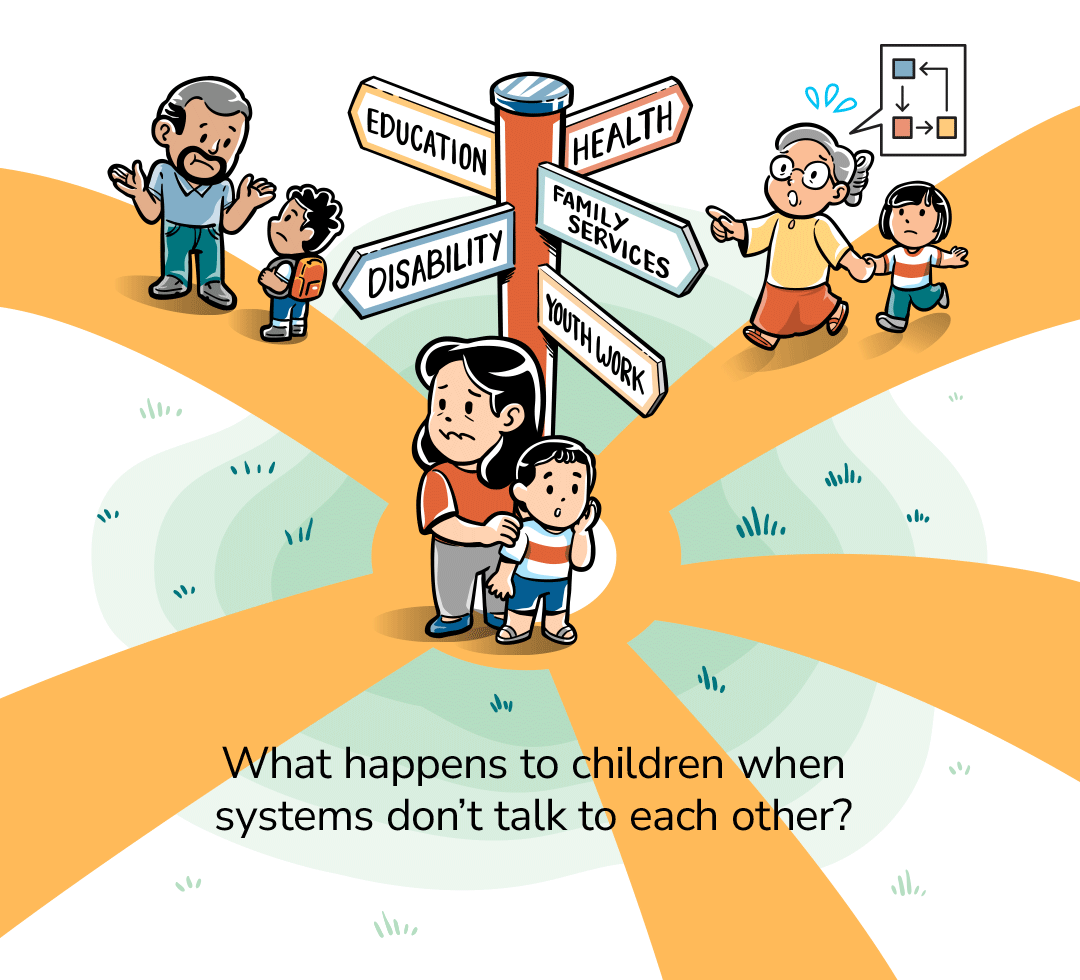
Service Fragmentation: Navigating a maze of agencies to get basic support.
-
2
“Cliff Effects”: Support abruptly ending because a child hits an age limit in a specific ministry’s mandate.
-
3
Persistent Gaps: No single body is empowered to close the cracks between systems.
It isn’t that the system doesn’t care – it’s that no one has the mandate to fix it.
Slow to See, Slow to Act
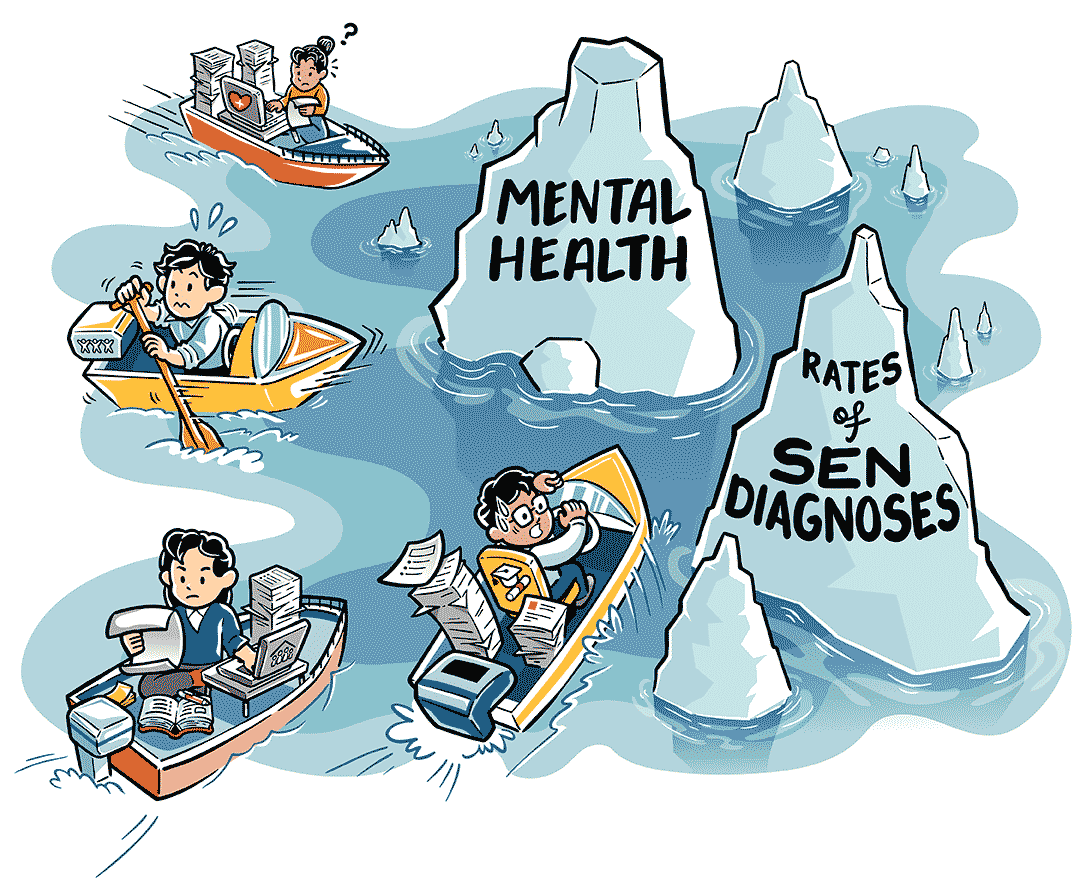
Diffused Accountability – no single Minister is tasked to scan the horizon, sound the alarm, and drive a rapid response for children.
When accountability is split, emerging threats go unaddressed.
- Vaping epidemic
- Surge in Special Educational Needs (SEN) diagnoses
- Youth mental health crisis
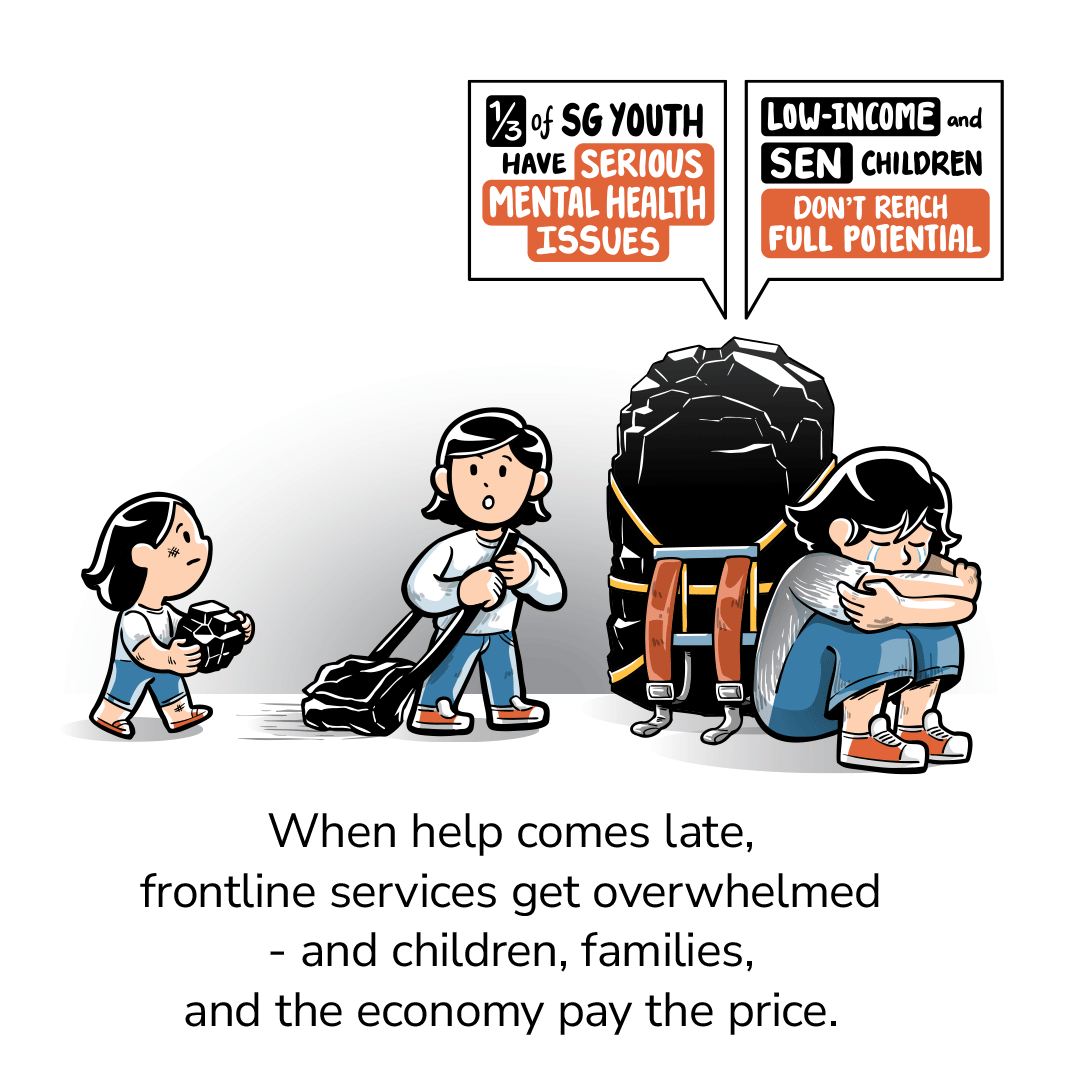
All required an early, coordinated, holistic response that has yet to come. This will have an economic and societal cost for Singapore down the road.
What if one Minister was tasked with identifying and tackling these threats before they become crises?
Conflicting Targets and Approaches
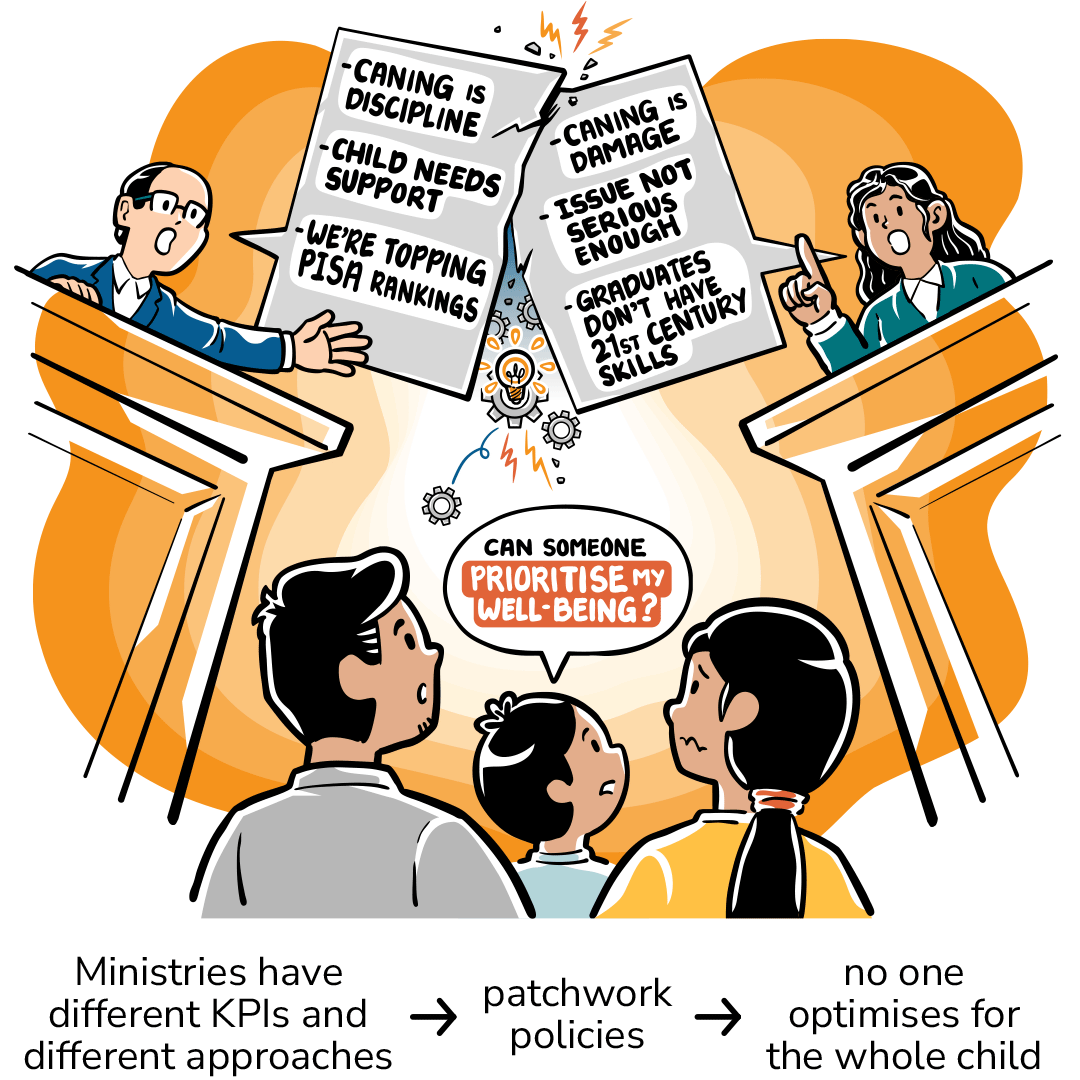
Currently, MOE, MSF, MOH, and MCCY all touch a child’s life, but they often operate with different KPIs and standards:
- A diagnosis and support recommendations for a learning disability from a public hospital (MOH) might be ignored by the school (MOE).
- Disciplinary strategies used in schools (MOE) may conflict with social service (MSF) practices.
- The skills needed for the AI economy are completely different from those prioritized in the PSLE and primary schools.
“Reducing silos” between Ministries isn’t just corporate jargon – it’s about reducing the burden for parents and caregivers.
Children Falling Through the Cracks
The cost of fragmentation is tragically high. In the case of Megan Khung, an Independent Review Panel found that diffuse responsibility and slow coordination between MSF, ECDA, and the police led to fatal delays.
Even in less extreme cases, children at risk, especially low-income or those with SEN, often disengage from school because agencies are not coordinated enough to help them holitically. We have the programmes, but we lack the coordination to make them truly effective.
Better Care Will Lead to Lower Costs
Would a dedicated Ministry for Children be too expensive? Actually, the opposite is true.
In social policy, early intervention is always cheaper than crisis care later. A single Minister for Children could manage a pooled budget to maximize lifetime value:
- Higher school completion and employment rates.
- Lower costs for healthcare, crime, mental health support, job support and reskilling.
- The Result: Healthier, happier citizens and a stronger economy.
The Solution: One National Lead, One Front Door

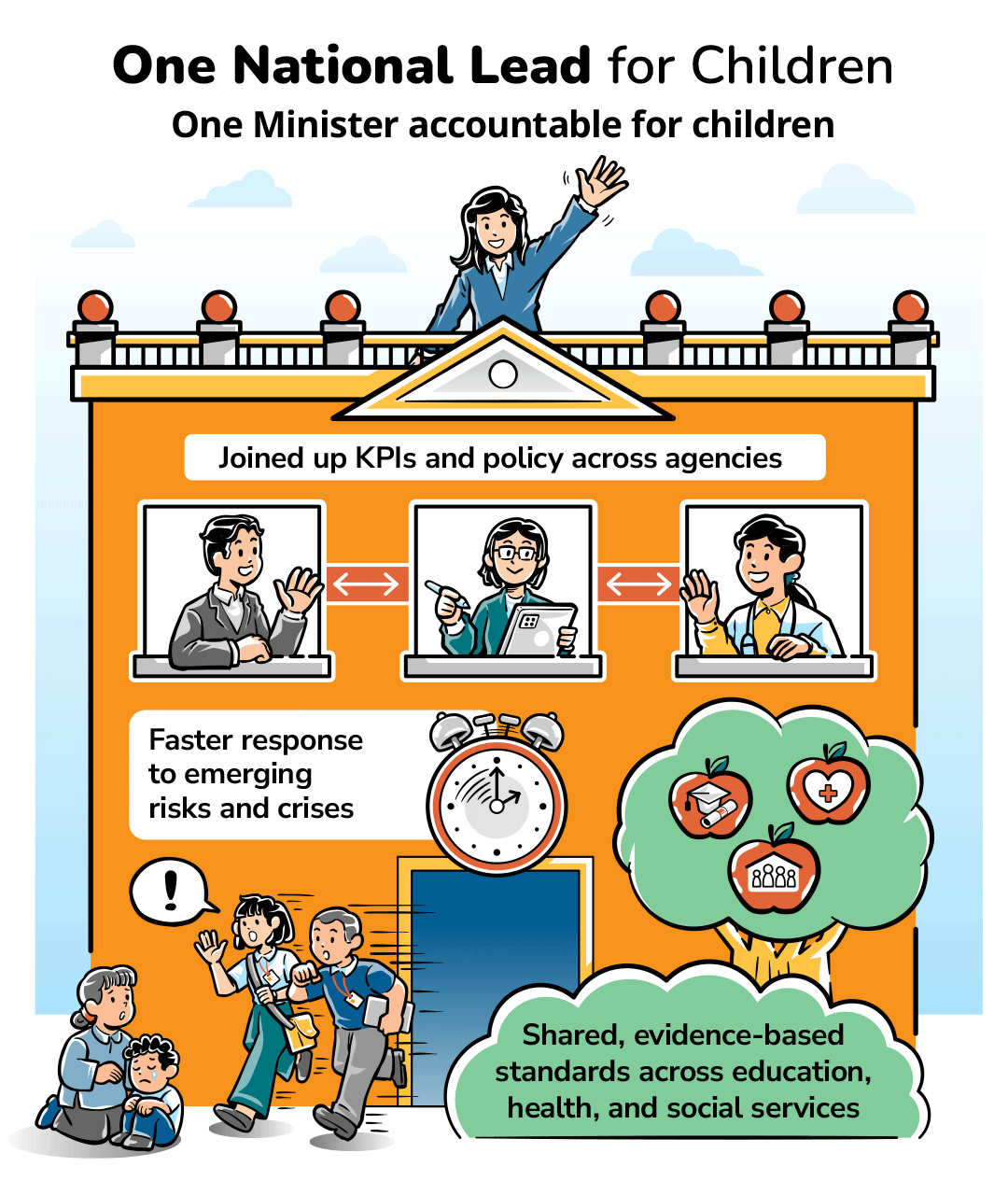
One National Lead
We need a senior Coordinating Minister for Children, advised by an independent panel of experts, to set whole-of-government goals.
This office would have the power to:
- drive rapid cross-agency response to emerging risks and crises,
- set and enforce evidence-based standards across all sectors working with children, and
- track performance across the system so bottlenecks – waitlists, manpower and capability shortages – are fixed in real-time.

One Front Door - An “AIC for Children”
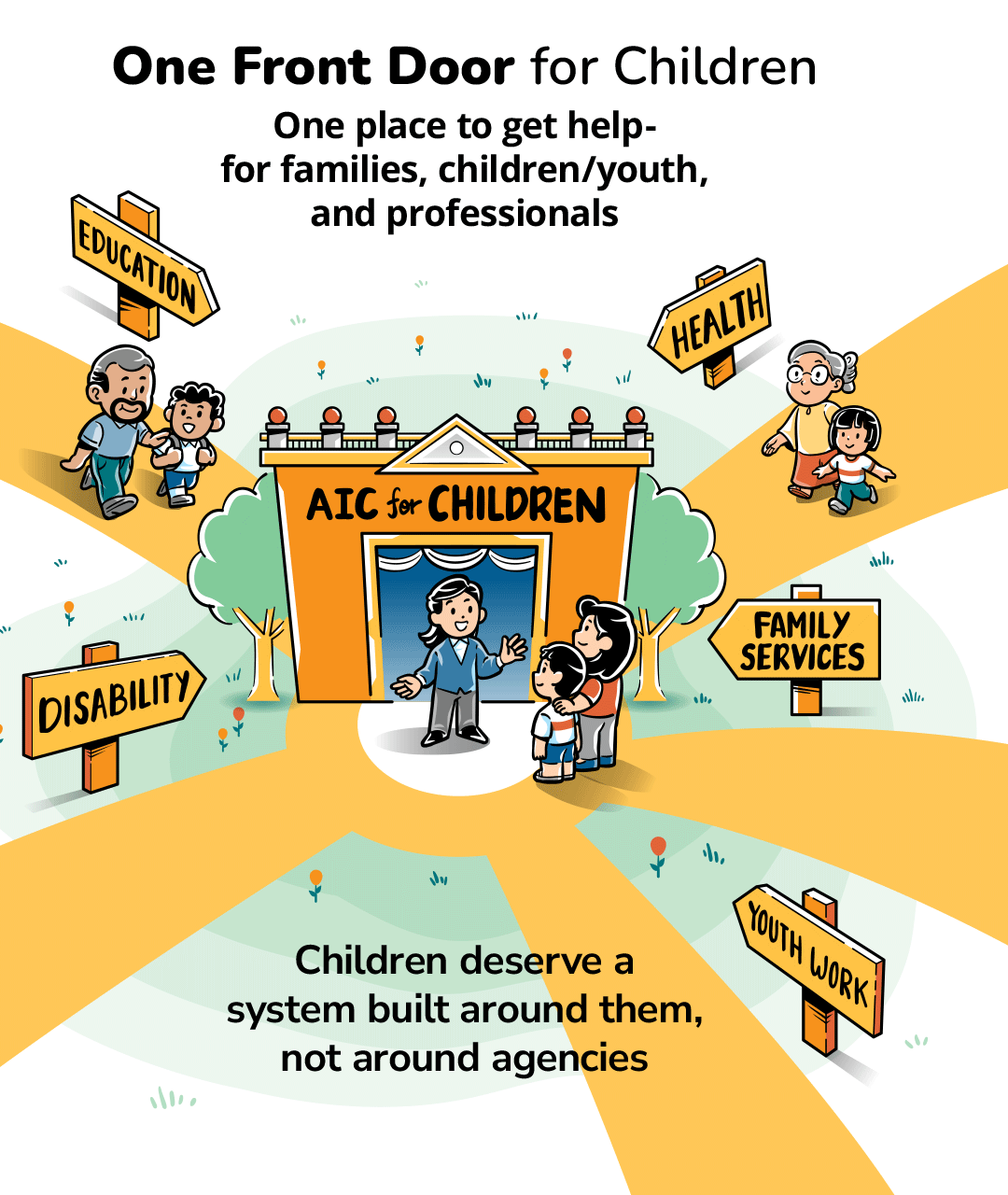
Just as the Agency for Integrated Care (AIC) has streamlined support for seniors, we need one place to get help for children. An AIC for Children could provide seamless support, coordinating between schools, healthcare, and social services, so parents and professionals helping children aren’t left to navigate the maze alone.
Finding help for a child shouldn’t be a source of distress. It’s time for a system where everyone knows exactly where to turn.